Engine-derived ROI benchmarks for Charlotte-area short-term rentals, single-family rentals, and small commercial properties. Numbers come from running real fixtures through the Cost Seg Smart engine, same engine that produces your actual study. Studies from $495.
Operated by Cost Seg Smart. Studies are IRS-aligned with engineer review included. 5 fixture benchmarks computed May 2026.
Numbers above are engine-estimated outputs from running 5 representative fixtures, not promises about what your specific property will produce. Results vary based on actual property condition, year built, renovation history, county assessor data quality, and rental treatment (STR vs LTR). Full per-fixture table, neighborhood breakdown, and downloadable CSV/PDF on the Charlotte cost seg benchmarks page.
Charlotte's cost-seg market is shaped by two intersecting investor cohorts that don't commonly overlap in other Sun Belt metros. The banking-professional buyer, Wells Fargo, Bank of America, Truist, regional finance, runs a W-2 income offset strategy where cost-seg deductions absorb part of the marginal-bracket liability, typically across 1–3 rental SFR holdings in Plaza Midwood, Dilworth, or South End. The full-time BRRRR operator, running 5–25 rental properties through buy-renovate-rent-refinance-repeat cycles across Charlotte's lower-cost neighborhoods (University City, Concord, suburban Cabarrus and Union counties), needs cost-seg studies stacked against every refinance event to maximize the depreciation pool against rental income.
North Carolina's partial decoupling from federal §168(k) is the structural wrinkle. NC has historically allowed only 85% of federal bonus depreciation in Year 1, recovering the remaining 15% over five subsequent years on the state schedule. For 2025+ acquisitions under OBBBA's restored 100% federal bonus, the NC-side addback is small in absolute dollars (15% of accelerated reclass × 4.5% rate = roughly $675 of timing mismatch per $100K of accelerated reclass), but it should be modeled into your CPA workflow rather than treated as a rounding error. The federal benefit is unaffected.
Charlotte is overwhelmingly a long-term-rental market, not an STR market. The City of Charlotte has historically been STR-permissive, but most cost-seg-relevant property in Charlotte (Plaza Midwood pre-war SFR, Ballantyne suburban rentals, Concord BRRRR fourplexes) operates as standard rentals under §469 passive-loss rules. Real-estate-professional status is the typical path to active-deduction treatment for full-time BRRRR operators.
Decoupling: NC's bonus depreciation methodology has been modified multiple times in the past decade. The federal deduction is unaffected; only the NC-side reconciliation timing moves.
Verify with your CPA. State tax conformity rules for federal §168(k) bonus depreciation are adjusted frequently, multiple states have modified their treatment two or more times in the past decade. The general framing on this page reflects our understanding as of May 2026, but you should always verify current-year treatment with a qualified CPA or tax attorney before relying on specific dollar projections for your situation.
These aren't rough estimates. Each fixture was run through the same engine that produces your actual study, RSMeans 2024 base costs, BLS PPI time index, county assessor land allocation, IRS Pub. 946 / Rev. Proc. 87-56 MACRS classification, 100% bonus depreciation per OBBBA.
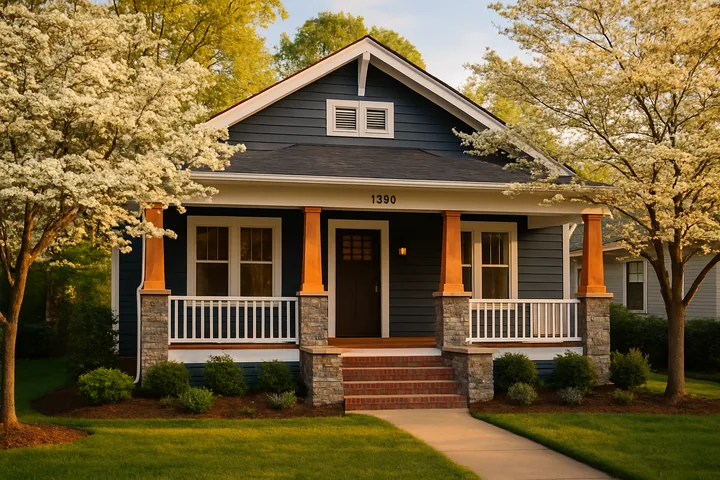
| Purchase price | $625,000 |
| Depreciable basis | $507,250 |
| Land allocation | 18.8% |
| 5-year reclassified | $46,617 |
| 15-year reclassified | $34,613 |
| Total reclass | 16.0% |
| Purchase price | $825,000 |
| Depreciable basis | $679,635 |
| Land allocation | 17.6% |
| 5-year reclassified | $61,801 |
| 15-year reclassified | $49,418 |
| Total reclass | 16.4% |
| Purchase price | $485,000 |
| Depreciable basis | $398,524 |
| Land allocation | 17.8% |
| 5-year reclassified | $44,914 |
| 15-year reclassified | $4,042 |
| Total reclass | 12.3% |
| Purchase price | $425,000 |
| Depreciable basis | $344,208 |
| Land allocation | 19.0% |
| 5-year reclassified | $34,848 |
| 15-year reclassified | $22,391 |
| Total reclass | 16.6% |
| Purchase price | $685,000 |
| Depreciable basis | $549,850 |
| Land allocation | 19.7% |
| 5-year reclassified | $76,405 |
| 15-year reclassified | $33,166 |
| Total reclass | 19.9% |
Cost-seg ROI varies more by neighborhood than by city. Charlotte's 5 sub-markets each have their own land-allocation pattern and property archetype:
| Neighborhood | Typical value | Typical land allocation | Profile note |
|---|---|---|---|
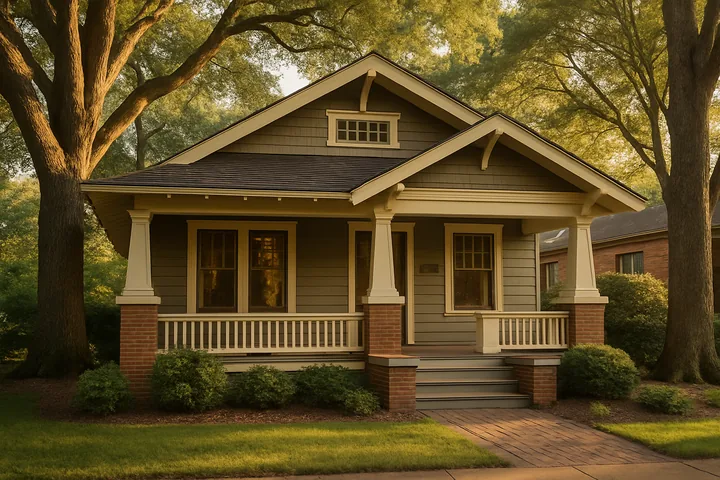
| Plaza Midwood / NoDa | $625,000 | ~28% | Pre-war 1920s bungalow stock heavily renovated post-2010. Strong fix-and-flip and SFR rental activity. Higher land allocation due to neighborhood-scarcity premium. Walking-distance amenity premium. |
| Dilworth | $825,000 | ~30% | Historic streetcar-suburb neighborhood with 1910s–1930s Craftsman and Tudor stock. Highest land allocation in our Charlotte fixtures. Mix of fix-and-flip and SFR rental, some condo conversion. |
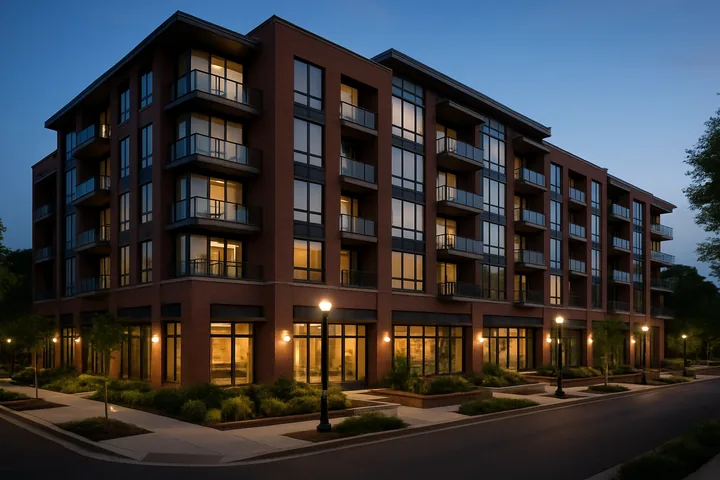
| South End / SouthPark | $485,000 | ~24% | Post-2010 mid-rise condo and townhome dominant. New-construction product with cleaner reclassification ratios. Lower land allocation due to vertical density. |
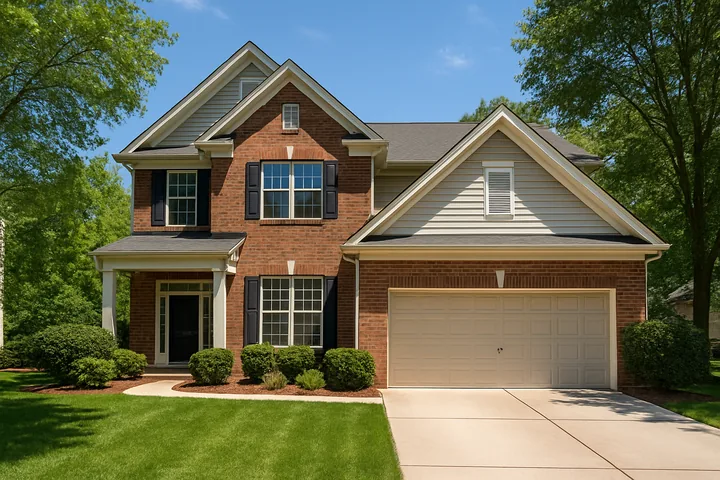
| Ballantyne / Pineville | $425,000 | ~22% | Suburban SFR market south of Charlotte. Lower land allocation. Strong LTR rental cash flow profile. Mecklenburg County (some Pineville town) jurisdiction. |
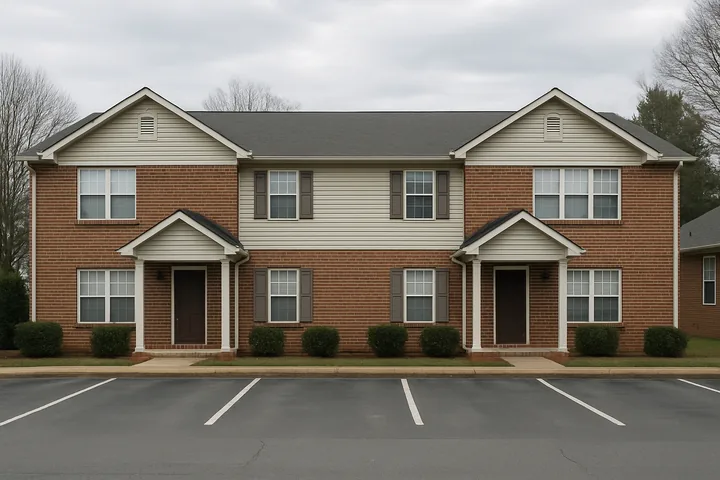
| University City / Concord (suburban) | $365,000 | ~20% | Lower-cost SFR rental market north and northeast of Charlotte. Lowest land allocation. Strong BRRRR and build-to-rent activity. Cabarrus County (Concord), separate jurisdiction with no Charlotte STR regulation. |
Methodology note: "Typical land allocation" reflects baseline patterns for the sub-market. For ultra-premium or resort-tier inventory where reconstruction cost exceeds 2.0× the implied depreciable basis after subtracting baseline land, the engine applies a premium land floor (~50%) to keep the study within audit-defensible territory. This means individual fixture engine output may exceed the neighborhood typical, especially for resort-tier ski-in/ski-out, beachfront, or view-premium product where land scarcity dominates value. See the /data/ page for per-fixture land-source attribution. Results vary substantially by specific property condition, renovation history, and assessor records.
City of Charlotte short-term rental regulation is comparatively permissive within Mecklenburg County, STR operation is allowed with a city Use Permit and lodging-tax registration, no primary-residence restriction. Adjacent jurisdictions: Cabarrus County (Concord, Kannapolis), Union County (Indian Trail, Waxhaw), Iredell County (Mooresville, Statesville), all operate lighter regulatory regimes. Despite the permissive STR environment, most cost-seg-relevant Charlotte property operates as long-term rental given the strong year-round LTR cash flow profile, the banking-employer presence supporting consistent rental demand, and the BRRRR-friendly market dynamics. Material participation under §469 for non-STR rentals requires real-estate-professional status or other passive-loss-bypass strategies, Charlotte's high-volume BRRRR operators typically pursue real-estate-professional status to convert passive losses to active deductions.
For the full IRS-rule reference layer (§168(k), §469 material participation, state conformity), see irsdepreciationrules.com, our open reference site.
Possibly, but you need to be careful about §469 passive-loss rules. Cost-seg deductions on a rental property create passive losses (unless the property is operated as a short-term rental under the §469 STR loophole or you qualify as a real-estate professional). Passive losses can only offset passive income, not W-2 active income. So if your $80K of accelerated cost-seg reclassification produces $80K of Year-1 passive loss, that loss can't be used against your $400K banking salary in the same year, it suspends forward and offsets future rental income (or releases on disposition). The path to converting passive losses to active W-2 offset is: (1) operate the property as a short-term rental under §469's STR loophole (Charlotte is STR-permissive, so this is structurally available), (2) qualify as a real-estate professional under §469(c)(7), requires 750+ hours of real-estate activity annually, more than any other trade or business, which is hard for a full-time banking employee, OR (3) wait until you have passive income from other sources to consume the accumulated losses.
Cleanly, and at scale, the math compounds significantly. Each BRRRR refinance event re-bases the property for cost-seg purposes (the refinance itself doesn't change basis, but the cost-seg study can be performed at any time during ownership and produces a one-time §481(a) catch-up deduction if the study is performed in a year after acquisition). A full-time BRRRR operator running 5+ Charlotte rentals can: (1) perform cost-seg on each new acquisition immediately, producing Year-1 accelerated deductions against passive rental income; (2) qualify as a real-estate professional under §469(c)(7) since 750+ hours of real-estate activity is typically achievable with 5+ properties; (3) use accumulated passive losses against W-2 income (if a separate W-2 source exists) once real-estate-professional status is established. The NC 15% addback applies at portfolio level, but the absolute dollar impact remains small even at scale.
Less than you might think. Yes, Charlotte allows non-primary-residence STR operation with a Use Permit and lodging-tax registration, meaning the §469 short-term-rental loophole is structurally available for properties operated as STRs. But the practical reality is that most cost-seg-relevant Charlotte property is operated as long-term rental because the year-round LTR demand profile is unusually strong (banking-employer presence, growing population, BTR community demand), and LTR cash flow exceeds STR profitability for most property types and price bands in Charlotte. For investors specifically wanting STR-loophole treatment, Charlotte is structurally accommodating, but operationally most owners run LTR strategies.
Because the engine doesn't apply STR FF&E uplift to long-term-rental properties. Furnished STRs include extensive 5-year FF&E packages (appliances, electronics, furniture, decorative finishes, kitchen kits) that count toward accelerated reclassification. Unfurnished LTR properties don't have that FF&E layer, the 5-year personal property pool is smaller because the engine only counts permanently-installed items (built-in appliances, certain electrical, certain finishes) rather than mobile FF&E. Result: typical Charlotte LTR reclassification ratios run 14–18% versus 22–28% for comparable-price furnished STRs in markets like Gatlinburg or Tahoe. The Year-1 federal-plus-NC savings is still meaningful at scale, especially for portfolio operators, but per-property the dollar amount is smaller.
Modestly. NC's 15% bonus depreciation addback applies at portfolio level the same way it applies to single-property buyers, 15% of accelerated reclassification dollars across all properties get the timing mismatch. For a Charlotte BRRRR operator with 10 properties producing combined $200K of accelerated reclassification annually, the NC-side timing impact is roughly $1,350 of deferred state savings ($200K × 15% × 4.5%), recovered over five years rather than concentrated in Year 1. At portfolio scale this is meaningful enough to track and model, but it doesn't change the fundamental decision to pursue cost-seg studies, the federal Year-1 benefit at 100% bonus dominates the calculation.
More general cost-seg questions answered at costsegsmart.com/faq/.
Cost Seg Smart studies are IRS-aligned, engineering-reviewed, and include written audit defense. Pricing is transparent and starts at $495 for residential properties under $300K, full pricing on the main site.